
Posted by AOSABER Team | Deep Dives into Lightsaber Lore & Galactic Legends
Ever since The Mandalorian premiered on Disney+, Din Djarin — the quiet, mysterious bounty hunter — has quickly become one of the most compelling new icons in the Star Wars universe. Here at AOSABER, we talk to fans every day. And the question is always the same: what makes this character so fascinating?
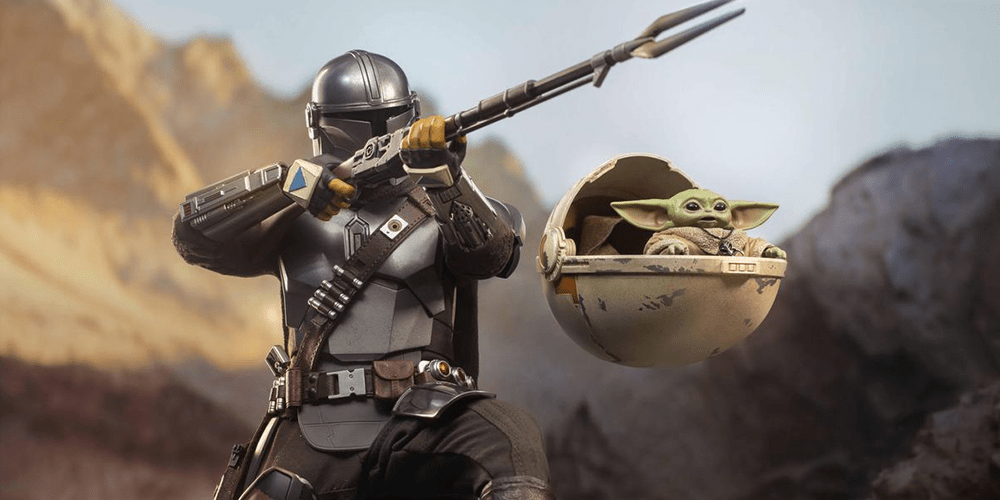
The answer goes far beyond the shiny Beskar armor or the hovering pram carrying Grogu (Baby Yoda). The Mandalorians represent an ancient, resilient, and deeply contradictory warrior culture. To truly appreciate the series, you need to understand their creed, their weapons (especially the unique Darksaber), and their long, painful struggle to survive in the tides of galactic history.
This guide will take you beyond the screen and help you fully understand the world of The Mandalorian.
1. Who Are the Mandalorians? More Than a Helmet — A Creed
The Mandalorians are not a single race. They are a culture and a set of beliefs. Originating from the planet Mandalore in the Outer Rim, they are organized into clan-based societies. In Star Wars chronology, Mandalorian history dates back to before the founding of the Old Republic. They are the only non-Force-sensitive group that dared to wage open war against the Jedi Order.
The core of Mandalorian culture is known as the Resol'nare — the six tenets that define what it truly means to be a Mandalorian:
-
Wear armor.
-
Speak the Mandalorian language (Mando'a).
-
Defend yourself and your clan.
-
Raise your children as warriors.
-
Answer the call of the Mand'alor (the leader of Mandalore).
-
Support your clan members unconditionally.
In The Mandalorian, Din Djarin belongs to the Children of the Watch — a tribe that follows an even stricter rule: never remove your helmet in the presence of others. Not all Mandalorians follow this rule (in Rebels, Bo-Katan shows her face freely), but for Din Djarin, the helmet is not just armor. It is an identity. If he removes it, he ceases to be a person in the eyes of his creed. He loses his right to say, "This is the Way."
This is the fascinating contradiction of the Mandalorians: they appear to be cold-blooded mercenaries, yet they hold themselves to a moral code even stricter than the Jedi. Their "Way" is not a set of laws — it is a sense of honor that runs in their blood.
2. The Iconic Weapon: The Darksaber — A Manifestation of the Mandalorian Soul

Within the entire Star Wars weapons lineage, no weapon carries as much political metaphor and spiritual weight as the Darksaber. Here at AOSABER, we see the Darksaber as more than just a cool-looking lightsaber. It is a living symbol of Mandalorian history, pride, and suffering.
A Unique Origin:
Legend has it that thousands of years ago, a Mandalorian warrior named Tarre Vizsla was chosen by the Jedi Order. He became the first — and only — Mandalorian Jedi. Using the Force, he forged a lightsaber unlike any other: a dark, black blade shaped like a physical sword, surrounded by an eerie white glow. When swung, it hums with a distinct, low-pitched drone. After Tarre Vizsla's death, the Jedi kept the blade in their temple on Coruscant. But the Vizsla clan later broke into the temple and stole back their ancestral blade.
A Symbol of Power:
From that moment on, the Darksaber became the symbol of leadership for all Mandalorians. Whoever holds the Darksaber — and wins it in combat — has the right to rule all the clans. This created an unbreakable rule: The Darksaber cannot be given. It must be earned. If someone is handed the blade, it is seen as a bad omen, leading to instability and clan division.
A Unique Feel in Combat:
Because of its unique blade shape and weight distribution, the Darksaber is much harder to wield than a normal lightsaber. In The Mandalorian, when Din Djarin first picks up the Darksaber, he is visibly clumsy — he even cuts his own leg. This is not a lack of skill. The Darksaber seems to have a will of its own. It is heavy, restless, and requires the wielder to completely submit to their inner fighting instinct. This is a perfect metaphor for collecting lightsabers: sometimes, the weapon chooses the warrior, not the other way around.
3. The Long Journey of the Darksaber: From The Clone Wars to The Mandalorian (Spoilers)
To understand the core conflict of The Mandalorian Season 3, you need to know the recent history of the Darksaber. This is not just the journey of a blade — it is the rise and fall of Mandalore itself.
During the Clone Wars:
The Darksaber fell into the hands of Pre Vizsla, leader of the Death Watch. When he was defeated in a duel by Darth Maul, Maul took the Darksaber and used it as a symbol of his rule over Mandalore.
During the Imperial Era:
In Rebels, the young Mandalorian warrior Sabine Wren found the Darksaber in Maul's old hideout. She trained hard and eventually wielded the blade to lead the Mandalorian resistance in liberating her planet from the Empire. After that, Sabine gave the Darksaber to Bo-Katan Kryze, hoping she could unite the clans. But during the horrific event known as the Great Purge of Mandalore, the Empire used overwhelming firepower to devastate the planet. Bo-Katan, in despair, surrendered to Moff Gideon — and the Darksaber fell into Imperial hands.
During the Bounty Hunter Era:
At the end of The Mandalorian Season 1, Moff Gideon appears with the Darksaber, using the legendary blade to intimidate everyone. In the Season 2 finale, Din Djarin defeats Gideon in combat and becomes the rightful owner of the Darksaber.
But here's the problem: Bo-Katan believes she is the true ruler of Mandalore. However, she did not defeat Gideon herself. If she takes the Darksaber without winning it, she cannot lawfully rule. If she forces the issue, it would cause civil war. And Din Djarin — a member of the ultra-orthodox Children of the Watch, an "apostate" who removed his helmet — now holds the key to ruling all of Mandalore.
This conflict perfectly illustrates the tension between tradition and politics: Do you follow the ancient creed (rule by the blade) or practical leadership (Bo-Katan's experience)? The Mandalorian Season 3 revolves entirely around this question.
4. Creed vs. Ruler: Din Djarin's Identity Crisis
In The Mandalorian Season 3, we see Din Djarin trapped in a double crisis. On one hand, he removed his helmet to save Grogu, violating the "Way" of his tribe. He is exiled and must "bathe" in the mines of Mandalore to atone. On the other hand, he holds the Darksaber — but he has no desire to rule anyone.
This raises a deep philosophical question: Must a leader follow every ancient creed to be a good ruler?
We can compare two Mandalorian female leaders:
-
Duchess Satine Kryze: In The Clone Wars, she was a pacifist leader who tried to move Mandalore toward neutrality and demilitarization. She was eventually overthrown by extremists. She represented progress.
-
Bo-Katan Kryze: She has spent her entire life fighting to reclaim Mandalore, but she is always trapped by the rules of the Darksaber. She represents the struggle within tradition.
Din Djarin's solution is very "Mandalorian": He doesn't talk politics. He doesn't talk about ruling. He simply accepts his atonement mission. In the end, he earns the warriors' respect through hand-to-hand combat with a wild beast. His purity — his focus on the "Way" itself, rather than on power — makes him the most worthy leader of all.
5. Why This Matters: A Message for Lightsaber Collectors
Dear AOSABER readers, we love The Mandalorian and the Darksaber not just for the cool special effects.
The Darksaber challenges everything we thought we knew about Star Wars weapons. A Jedi lightsaber is elegant, defensive, and represents peace and justice. A Sith lightsaber is violent, aggressive, and represents desire and rage. The Darksaber is entirely different — it is heavy, rugged, political, and almost religiously ritualistic.
It reminds us that a weapon is an extension of the warrior's identity and values.
-
If you admire Din Djarin's quiet reliability, his commitment to family, and his willingness to fight the entire galaxy for those he loves — then the Darksaber is the reflection of your soul.
-
If you prefer Obi-Wan Kenobi's wisdom and restraint — then a classic blue or green lightsaber suits you better.
-
If you are drawn to Darth Vader's tragic fate — then perhaps the red blade's fury speaks to your own inner darkness.
Here at AOSABER, we truly believe that every lightsaber is more than a prop. It is your other self in that galaxy far, far away. When you grip the hilt, you are not just imitating a character — you are declaring which creed you follow.
6. Final Thoughts: This Is the Way
The Mandalorian has brought an unprecedented "space western" feel to Star Wars. It strips away the long political debates of the Galactic Senate. It abandons the complicated family drama of the Skywalkers. It returns to the most raw and emotional core: A hardened warrior bound by iron rules, and how he breaks every one of them for a helpless child.
Din Djarin teaches us something important: the true "Way" is not written in the laws under your helmet. It is written in the consequences of every choice you make. When he removes his helmet to save Grogu, he violates his creed — yet he becomes something greater than any follower of the "Way."
This is why the Mandalorian legend is so great. It is not about conquering the galaxy. It is about survival, creed, family, and how to find your own path through the ruins.
Whether you follow the Mandalorian Way, the Jedi Code, or the Sith Rule of Two, here at AOSABER, there is a blade — or a shadow — waiting for you.
May the Force be with you, and this is the Way.
Ready to forge your own legacy?
Visit www.aosaber.com today and explore our newest collection of high-quality lightsabers. From classic movie replicas to the highly collectible Darksaber special edition — every blade is carefully tuned, waiting for its true master.
Tags: Mandalorian, Darksaber, Star Wars Lore, Lightsaber Collection, AOSABER, Din Djarin, Grogu, This Is The Way